In an era where data is often more valuable than physical assets, India has rapidly transformed into a global digital powerhouse. With the rollout of 5G, the ubiquity of UPI, and a booming SaaS ecosystem, the "attack surface" for cyber threats has expanded exponentially.
For Indian enterprises, an Information Security (IS) Audit is no longer just a checkbox for the compliance department; it is a critical health check for business continuity. Whether you are a fintech startup in Bengaluru or a manufacturing giant in Pune, understanding the frameworks and standards governing Indian cyberspace is essential.
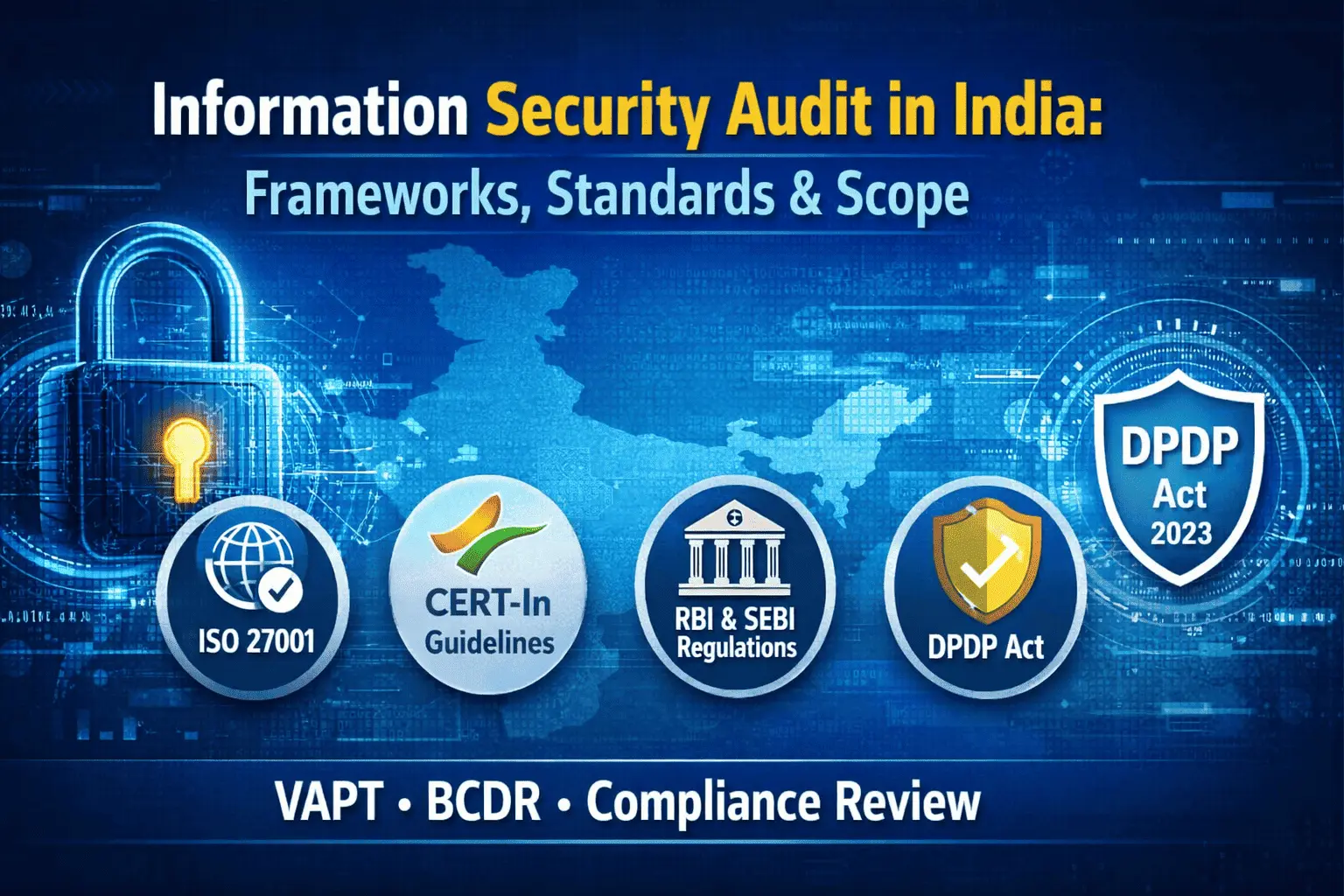
India consistently ranks among the top targets for ransomware and data breaches globally. The legislative landscape is also shifting. With the passage of the Digital Personal Data Protection (DPDP) Act 2023, the stakes for data negligence have never been higher, with penalties reaching up to ₹250 Crores.
An IS Audit serves as an independent evaluation of an organization’s internal controls, policies, and operations to ensure that data remains confidential, available, and accurate.
In India, the "how" of an audit is dictated by a mix of international best practices and domestic mandates.
Most Indian firms start here. It is an international framework for an Information Security Management System (ISMS). It focuses on a risk-based approach, ensuring that security controls are proportionate to the risks the business faces.
The Indian Computer Emergency Response Team (CERT-In) is the national nodal agency for Cyber Security. They issue periodic guidelines on "Whitelisting," "Vulnerability Assessment and Penetration Testing (VAPT)," and incident reporting. For many government contracts, being "CERT-In Empanelled" is a mandatory requirement for auditors.
If you operate in the BFSI (Banking, Financial Services, and Insurance) sector, the rules are stricter:
The Ministry of Electronics and Information Technology (MeitY) provides the overarching framework for "Data Sovereignty." The new DPDP Act emphasizes Data Fiduciary accountability, making regular audits a legal necessity for those handling "significant" amounts of personal data.
A common mistake is thinking an IS Audit is just a "password check." In reality, a comprehensive audit covers several layers:
Information Security is a journey, not a destination. In the Indian market, where trust is the currency of digital growth, an audit should be viewed as a competitive advantage. It tells your clients, partners, and investors that you take their privacy seriously.
As the DPDP Act begins its implementation phase, now is the time for Indian businesses to move from a "reactive" security posture to a "proactive" audited one.
In India’s rapidly evolving digital economy, Information Security Audits are no longer reactive exercises triggered by regulation or fear of penalties. They are strategic instruments of assurance—providing leadership with clarity, control, and confidence in an increasingly complex risk environment.
Frameworks such as ISO/IEC 27001, CERT-In guidelines, and sectoral mandates from RBI and SEBI are not merely compliance checklists; they represent a maturity model for resilient enterprises. When applied correctly, audits reveal not just technical weaknesses but governance gaps, operational risks, and opportunities to strengthen digital trust.
© 2026 Digital Task Force - ISMS
