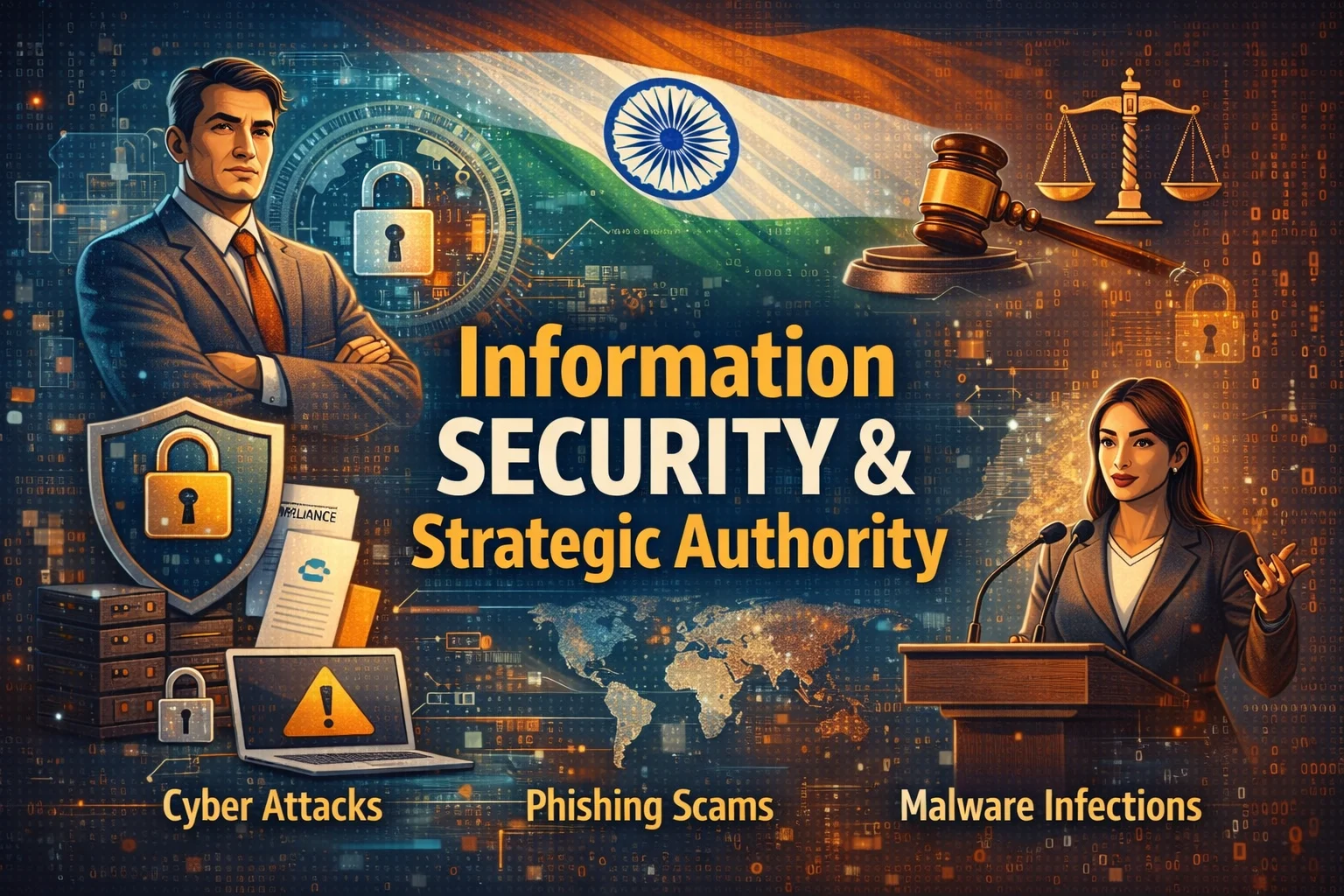
For decades, the board of directors viewed Information Security as a "necessary evil"—a technical insurance policy buried deep within the IT budget. But as we navigate an era where digital assets are the business, that perspective is not just outdated; it’s dangerous.
The most successful leaders today have realized that Information Security is no longer a back-office function. It is a Strategic Lever that, when pulled correctly, grants an organization the authority to innovate faster, enter new markets with confidence, and command a premium for their services.
Traditional Security was built on a foundation of "enforcement." It was the gatekeeper that often slowed down product launches or complicated simple workflows. Strategic Authority requires a total inversion of this model.
When Security is integrated into the DNA of a company, it becomes an enabler of business opportunity. Think of it like the brakes on a high-performance race car. The purpose of those brakes isn't just to stop the car—it’s to allow the driver to go faster into the turns, knowing they have the control to manage the risk.
By building a robust security posture, you aren't just "blocking hackers." You are:
One of the biggest hurdles to achieving Strategic Authority is the "Communication Gap." If you walk into a boardroom and start talking about cross-site scripting or zero-day vulnerabilities, you’ve already lost.
Strategic leaders translate technical threats into business impact. They don't talk about a "patching backlog"; they talk about "potential downtime in the core revenue engine." They don't talk about "phishing simulations"; they talk about "the resilience of our human firewall".
To bridge this gap, your blog and your leadership must focus on three core pillars:
You can buy the best XDR (Extended Detection and Response) tools on the market, but if your employees view security as "someone else’s problem," your authority is fragile.
True Strategic Authority is built on a Security-First Culture. This isn't about mandatory 15-minute training videos once a year. It’s about creating an environment where a developer feels a sense of pride in writing "secure by design" code and where a salesperson understands that protecting client data is part of the "customer experience".
When security is seen as a shared value rather than a technical burden, the entire organization moves with more agility. Decisions are made faster because "safety" is already baked into the process, not added as a clumsy afterthought.
If you want to lead in the space of Information Security and Strategic Authority, you must be the one to own the narrative.
Stop waiting for a breach to happen before talking to your leadership team. Start the conversation now by asking: "How can our security strategy directly contribute to our next $10M in revenue?"
By framing security as a value-driver rather than a cost-center, you move from being a "technician" to a "trusted advisor". You move from the basement to the boardroom. And most importantly, you secure not just your data, but the future of your organization.
At Digital Task Force (DTF), we help our clients to review and refine their security policies and stay compliant to security standards and regulations thereby gaining competitive advantage
Information Security is no longer about defending systems—it is about defining leadership. Organizations that continue to treat security as a technical checkbox will always operate in reaction mode, constrained by fear, audits, and crisis management. Those that elevate security to a strategic authority position themselves to move faster, scale confidently, and lead with trust.
When security speaks the language of business, it earns a permanent seat at the decision-making table. It becomes the force that safeguards continuity, strengthens market credibility, and enables innovation without compromise. In this model, security is not a barrier to growth—it is the permission to grow.
© 2026 Digital Task Force - ISMS
