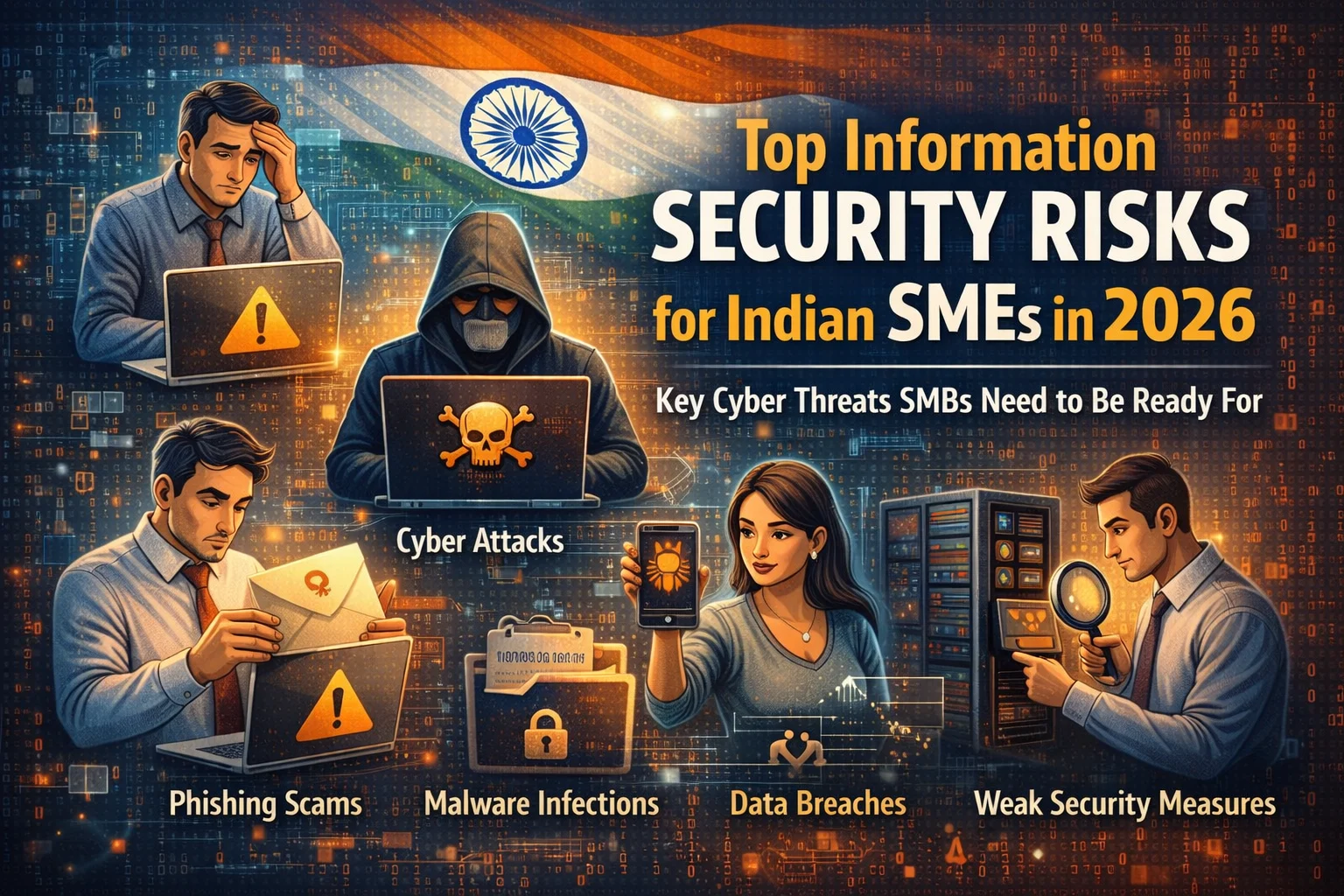
As we look toward 2026, the digital push (driven by UPI, ONDC, and rapid cloud adoption) has made SMEs prime targets. They have enough data to be valuable, but often lack the enterprise-grade defense of larger corporations.
The Indian SME sector has always been the backbone of our economy. But by 2026, the "backbone" has gone fully digital. From Kirana stores using sophisticated inventory AI to mid-sized manufacturers integrated into global supply chains, the attack surface has never been larger.
For an SME, a single data breach isn't just a technical glitch; it’s a massive blow to reputation and, often, a legal nightmare under India's evolving Digital Personal Data Protection (DPDP) Act.
Here are the top security risks you need to have on your radar this year.
In 2026, the "Nigerian Prince" emails are long gone. Hackers now use generative AI to clone the voice or video of a CEO or a trusted vendor.
Your security is only as strong as your weakest vendor. Hackers often target smaller logistics or payroll providers to get into the systems of larger clients.
Ransomware has evolved. It’s no longer just about locking your files; it’s about stealing them and threatening to leak them publicly unless you pay.
As SMEs integrate more with UPI, GSTN, and ONDC, they rely heavily on APIs (Application Programming Interfaces).
You can buy the most expensive firewall in the world, but if an employee clicks a malicious link in a "Discount Coupon" WhatsApp message, the firewall won't help.
The biggest shift for Indian SMEs in 2026 must be Security Awareness. Training your team to be skeptical and digitally literate is your best ROI.
Key Takeaway: In 2026, cybersecurity is no longer an IT expense—it is a core business survival skill.
By 2026, Indian SMEs will no longer be targeted because they are small—but because they are digitally connected, data-rich, and often under-protected. Cyber threats have evolved beyond random attacks into precision-driven operations that exploit trust, speed, and compliance gaps. For SMEs, the cost of inaction is no longer limited to downtime; it extends to reputational damage, regulatory penalties, and lost business opportunities.
The organizations that survive and grow will be those that treat cybersecurity as a business discipline, not a technical afterthought. This means embedding security into everyday operations—how approvals are given, how vendors are onboarded, how data is collected, and how employees are trained to recognize manipulation in a digital-first world.
© 2026 Digital Task Force - ISMS
